Home > Blog
Modern forestry in the UK is undergoing a renaissance as landowners, businesses, and policymakers recognize its dual value for rural economic development and for environmental sustainability in the fight against climate change. By embracing practices like mixed species planting, sustainable forest management, and ambitious afforestation (new forest planting) programs, modern forestry is delivering benefits both to local communities and to national goals for net zero carbon emissions. This article explores how contemporary forestry practices contribute to rural economies – through jobs, industry, land management, and tourism – while simultaneously enhancing carbon sequestration, biodiversity, and ecological resilience on the path to net zero.
Modern forestry moves away from the old model of single-species, monoculture plantations. Instead, there is an emphasis on mixed-species woodlands and sustainable management techniques. The UK Forestry Standard (UKFS)– the benchmark for sustainable forestry in Britain – even limits single-species planting to 65% in any new woodland, specifically to steer forestry away from vulnerable monocultures. Planting a mix of tree species (both native broadleaf and carefully chosen conifers) yields several advantages:
Sustainable practices are backed by policy and standards. All forestry projects receiving government support in the UK must adhere to the UKFS guidelines, which cover not only tree planting but also considerations for soil health, water protection, landscape, and community benefits. In essence, modern forestry in the UK is about multifunctional woodlands – designed to provide economic returns without sacrificing environmental quality. Mixed-species planting is one visible example of this ethos, creating woodlands that are both economically useful and ecologically sound.
Forestry has long been part of the rural economy in the UK, but modern forestry is expanding its economic importance at a time when rural areas seek sustainable growth. Planting and managing forests creates jobs and business opportunities, often in regions where other industries are scarce. From tree nurseries and planting crews, to forest management, harvesting contractors, and timber processing mills – the forestry and wood industry sustains a wide employment chain in rural Britain.
Government strategies explicitly identify forestry as a source of “green jobs” across the country. For example, the England Trees Action Plan (2021) states that growing trees in the UK will create more green jobs in every corner of the country. It highlights that forestry and arboriculture are an important source of jobs and revenue in rural areas, helping create secure livelihoods for local people. This is already evident in regions like Scotland, where forestry contributes around £1.1 billion to the economy each year and supports over 30,000 jobs. Across the UK as a whole, the forestry and primary wood-processing sector directly employs tens of thousands – and this number is growing as tree planting accelerates. Crucially, these jobs are often located in remote or economically disadvantaged areas, providing much-needed employment.
The economic impact goes beyond direct forestry jobs. Downstream industries flourish from a robust forestry sector: local sawmills and timber product manufacturers, biomass energy producers, and even construction companies benefit from more domestic timber supply. Currently, the UK has a significant timber trade deficit – it is the world’s second largest importer of timber after China, meaning huge volumes of wood are bought from abroad. Expanding home-grown forestry can substitute for imports, keeping revenue in the UK and reducing the carbon footprint associated with transporting wood from overseas.
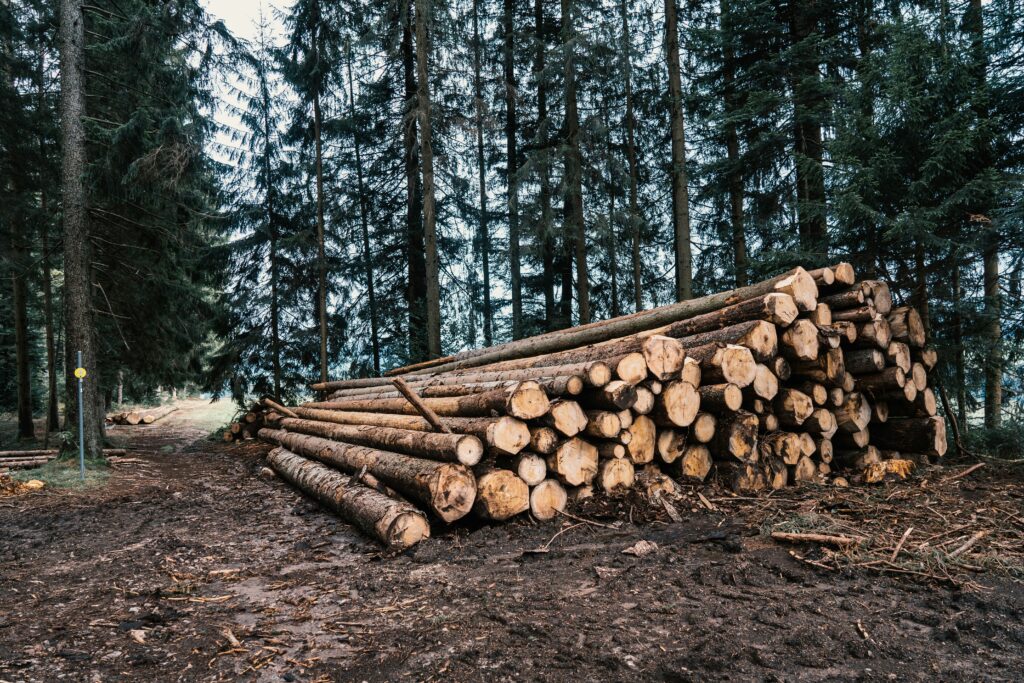
One of the most tangible economic contributions of modern forestry is through the timber industry and the emerging biomass energy sector. Well-managed forests produce a renewable resource – wood – that feeds into many value chains:
Forestry work itself has become more skilled and professional. Training programs and apprenticeships in forestry, arboriculture, and land management are expanding, giving young people in rural areas career paths in the green economy. Operating advanced forestry machinery, managing woodlands for multiple objectives, and handling environmental compliance are all part of today’s forestry jobs.
Forestry work also tends to be year-round and long-term. Once trees are planted, forests need decades of management, meaning a steady cycle of employment. This stability is valuable in rural areas. A healthy forestry sector supports peripheral businesses as well – from local equipment suppliers and repair services to professional services like forestry consulting, surveying, and environmental monitoring.
Many farmers diversify into woodland creation on marginal land or integrate trees into their farming systems, thus adding an income stream alongside traditional farming. This diversification can improve the economic resilience of farms and estates, keeping them profitable and preserving rural livelihoods.
Forests aren’t just about wood and carbon – they have a huge social and economic impact through recreation and tourism. As woodland cover in the UK expands, many rural areas are seeing new opportunities for visitor attraction and outdoor leisure businesses.
The creation of The National Forest in central England has dramatically boosted the local visitor economy. Over the past 30 years, around 9 million trees have been planted there, turning a formerly industrial landscape into a green destination. Today, more than 9 million people visit the National Forest each year, enjoying its woodlands, trails and attractions. This influx of visitors has stimulated sustainable tourism businesses and helped regenerate towns that were once coal mining communities.
Across the country, Forestry England receives hundreds of millions of visits annually to its forests and woodland parks. These visits contribute billions annually to England’s economy through visitor spending on goods and services. By practicing sustainable forestry, foresters essentially create the natural capital that underpins this recreation economy.
Forests also support public health and wellbeing. Initiatives like social prescribing (doctors encouraging patients to join nature walks or conservation work) often utilize woodlands. Some rural areas have developed forest-based wellness and education centers, creating jobs in outdoor education and therapy.
Land Management Benefits: Modern forestry also supports broader land management strategies like flood mitigation (trees reduce downstream flooding), water regulation, and soil erosion control. In upland areas, forests help regulate water flow and improve water quality by filtering sediments – services for which water companies or government bodies are increasingly willing to invest.
Modern forestry is pivotal for the UK’s environmental objectives – especially achieving net zero carbon emissions by 2050. Trees are one of our most powerful nature-based tools to capture and store carbon, while also delivering ecological benefits:
Key initiatives supporting forestry include:
PB Forestry exemplifies the modern, sustainable approach to forestry in the UK. The company delivers a wide range of services – from tree planting and vegetation clearance to ecological surveys and innovative techniques like hydroseeding. PB Forestry’s ethos is environmental stewardship: every project aims to minimize impact while enhancing local ecology.
By employing skilled staff and modern machinery, PB Forestry enables landowners, estates, and businesses to achieve forestry projects that align with sustainability goals. Their work across energy, transport, conservation, and commercial sectors demonstrates how forestry integrates with broader industries.
PB Forestry shows how forestry companies are key players in both supporting rural economies and helping the UK achieve net zero carbon through professional, sustainable woodland management.
Modern forestry in the UK plays a multifaceted role in strengthening rural economies and driving progress towards net zero. It creates jobs, supports industries, fosters tourism, and provides ecosystem services. At the same time, it sequesters carbon, restores biodiversity, and builds resilience against climate change.
With ambitious government targets, community support, and skilled forestry service providers like PB Forestry, the UK is set to benefit from both the economic prosperity and environmental security that trees uniquely provide.